21 January 2026
Outdoor School vs Traditional School – Addressing the Most Common Fears
In this article, Ana Galvão, one of the founders of Escola Lá Fora, shares her perspective and the most common doubts that arise when the time comes to decide:
Choosing an outdoor school is not always an obvious decision. For many families, this choice raises questions that touch deeply rooted beliefs. Even when, on a rational level, it feels like it makes complete sense, we often hesitate when we hear opposing opinions from friends or family members. That is normal.
The truth is that these doubts also arose when we founded Escola Lá Fora.
After years in conventional schools and having grown up in a more conservative context, I too questioned myself: Won’t the rain cause discomfort? Will they be able to integrate into mainstream education in the future? Does this model leave them without limits or socially disconnected from reality?
(That last one is not true — it never crossed my mind — but I know it is a recurring concern for some families.)
It was through experience, daily observation, and science that I came to understand that this was the right path: healthy, resilient, curious, happy children who are prepared to deal with challenges. That is why I share here some of the most frequent doubts and what we have observed over the years at Escola Lá Fora.
“But is it really comfortable and positive to be outside, in the rain, all year round? Isn’t it too much?”
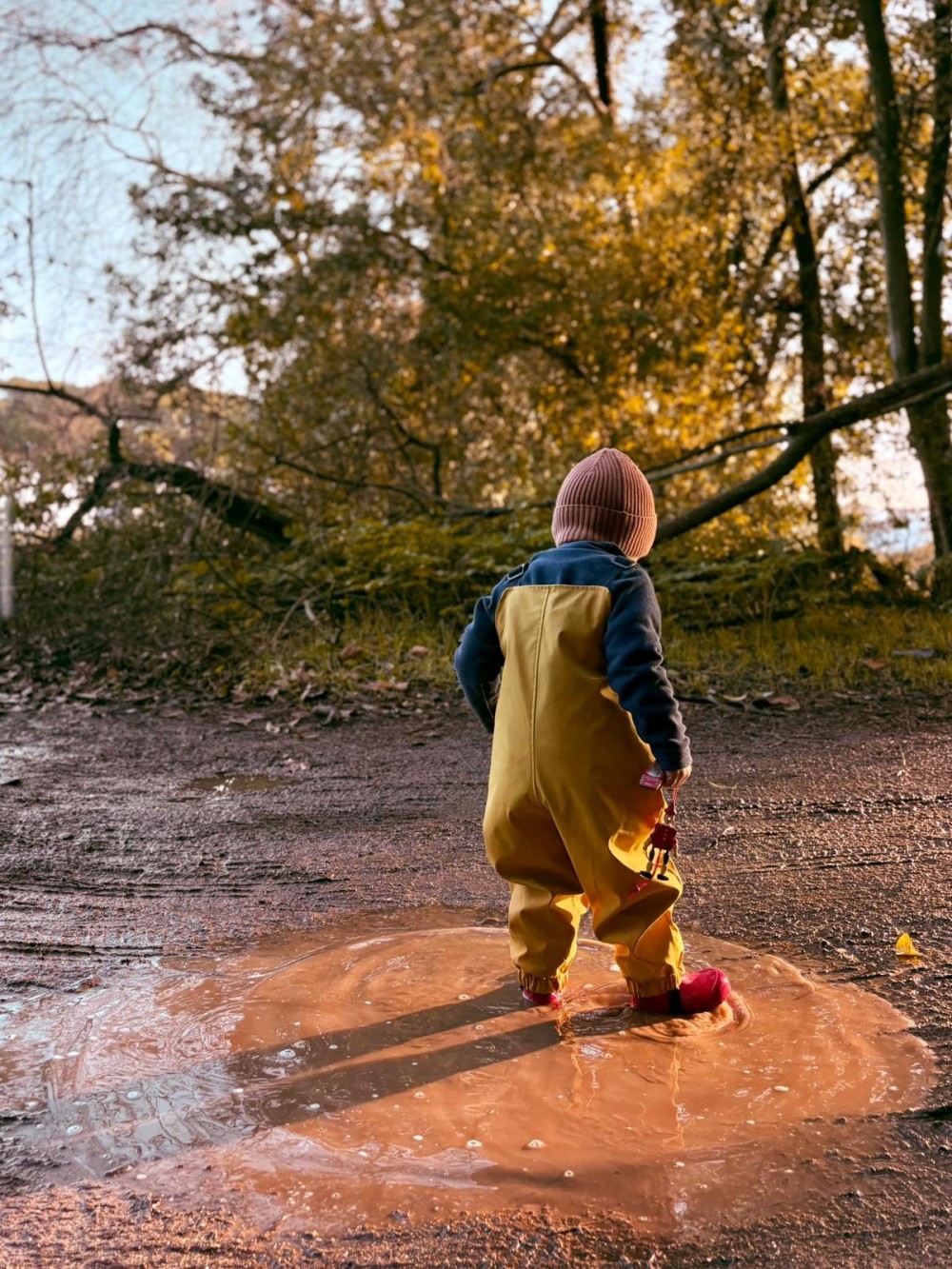
I’ll admit it: when I was working in an office, I also thought, “Poor things, are they really okay out there?” But as soon as I arrived at the forest, I could feel the contagious calm of nature and the serenity of outdoor play. Any discomfort is overcome with appropriate clothing - and that is essential.
Of course, there are days of heavy rain and unexpected situations. At these times, the team’s prior preparation and clearly defined procedures are essential to ensure children always feel safe. (Modesty aside, I know we have an outstanding team in this regard ????). For children, these moments are quickly taken in stride, becoming challenges that make them more resilient and better able to adapt to change.
So the question remains: is it still worth it? Yes, it always is. Children are not yet fully “moulded” by our beliefs and fears. They feel part of nature, and their senses are open and receptive to what it offers. Outdoors, they have the freedom to run and shout, and the opportunity to move in a healthy and spontaneous way. All of this is part of balanced growth.
“Isn’t there a danger in having too much freedom?”
The fear that children will grow up without rules or without a sense of limits.
The Forest School model is a participatory pedagogy: children learn to organise their days as a group, to make decisions, and to respect others. From a very young age, they become familiar with what it means to live in a democracy, learning to use their voice.
There are not many rules, but the ones that exist are essential for living in society — and therefore, they matter. At Escola Lá Fora, rules are built together with the children. This way, they make sense to everyone and are naturally respected.
The result? More autonomous, responsible, and empathetic children. And believe us, they are never “too young” to handle this responsibility — they constantly surprise us.
“It all sounds great, but when do they actually learn?”
From the outside, it is not always easy to understand how and when children learn, especially when it comes to more formal learning.
Play is essential for human development. Learning happens when we relate to others, when we are heard, when we ask questions, and when we find solutions.
At Escola Lá Fora, we follow the Curricular Guidelines for Pre-School Education, aligned with the Ministry of Education. In other words, this is not about “missing the essentials,” but about living and learning in a more integrated way.
Here, the child’s development is seen as a whole, and we work across all areas of development, starting from the group’s interests. What is done in a classroom can be done outdoors - but with more movement, a stronger connection to nature, and greater meaning for those who learn.
The big difference is not whether they learn, but how they learn. And that makes all the difference for the future.
“And how do they adapt to primary school afterwards?”
This is perhaps the most common question. Our experience shows that adaptation to primary school depends mainly on each child’s individual profile, rather than on the school they previously attended.
We believe that we give children the tools to face the challenges of primary school, and that taking away their opportunity to grow freely and in line with their needs does not help prepare them. In other words, sitting at a desk at the age of five does not mean they will cope better with sitting for longer hours at six. Anticipating developmental stages should not be the chosen path.
From Escola Lá Fora, children take with them the essential learnings, confidence in themselves, and a desire to always want to know more.