Aqui está a tradução para inglês:
The best way to prepare a child for learning is not by anticipating what will come next, but by strengthening what is growing now: the brain, curiosity, and confidence.
True preparation does not consist of teaching structured content prematurely, but rather in creating rich, free, exploratory experiences that ensure children develop thinking, language, autonomy, curiosity, and self-regulation.
The Legal and Pedagogical Framework in Portugal
The Curricular Guidelines for Pre-School Education (Order No. 9180/2016) define preschool as a space of planned and unplanned experiences, meaningful interactions, and activities that promote well-being, development, and learning (DGE, 2016).
Some of its fundamental principles are:
-
respect for each child’s individual pace;
-
an inclusive educational environment adapted to the social context;
-
integrated and holistic learning;
-
strong connection with families;
-
smooth transition to compulsory schooling.
These principles show that preschool should not anticipate formal learning but rather prepare through global development.
Playing is Learning
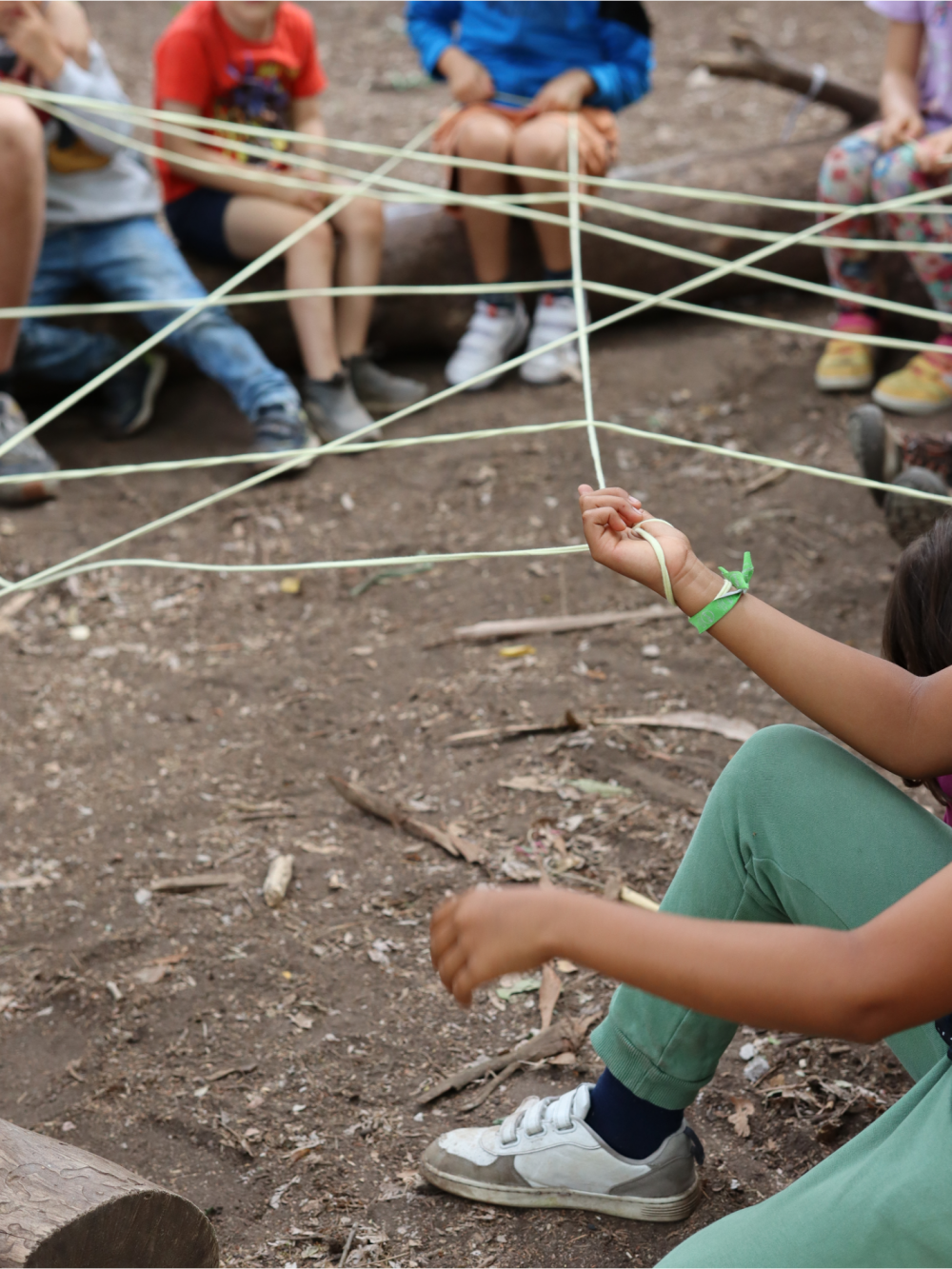
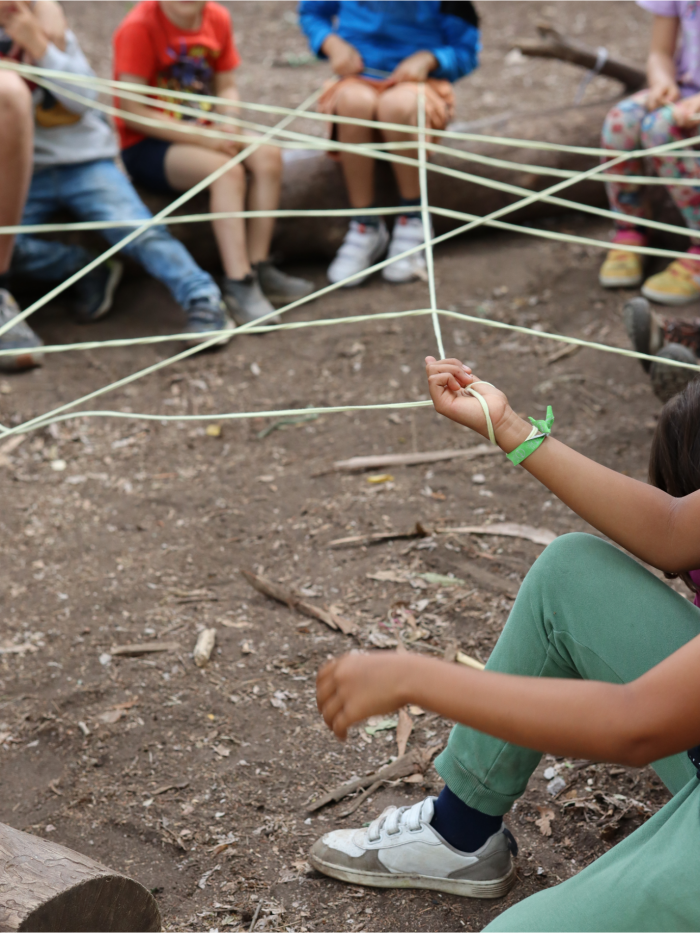
When children play freely, they explore, test hypotheses, resolve conflicts, and create narratives. This freedom develops multiple skills (Lopes & Neto, 2014):
-
oral language — by telling stories and negotiating rules;
-
symbolic thinking and problem-solving;
-
emotional and social self-regulation;
-
gross and fine motor skills.
Playing is therefore an act of deep learning.
The Risk of Forcing Learning
Trying to make children learn to read or write before they are motivated or neurologically ready can generate anxiety, beliefs of incapacity, and loss of interest.
Research shows that forced early reading does not bring lasting benefits but may cause negative psychological impact (Luby et al., 2016).
Contact with Nature
Portuguese research shows that contact with nature promotes well-being, autonomy, creativity, and social and emotional skills.
Outdoor play promotes autonomy and freedom, allowing children to explore and manipulate natural elements (Baldock, cited in Figueiredo, 2015).
In addition, increased physical activity improves mental health, reduces stress, and enhances self-esteem (Neto & Lopes, 2018).
Movement is also essential for cognitive development — it is through action and exploration that children understand the world and their body in space (Bento, 2015).
Free play in nature strengthens resilience and anxiety management (Ginsburg, cited in Olsen & Smith, 2017).
Learning Through Projects
The project-based methodology allows learning to emerge from themes that interest children themselves. They participate, investigate, formulate questions, experiment, and reflect (Vasconcelos et al., 2011).
This approach strengthens:
-
natural curiosity;
-
the ability to ask questions and seek answers;
-
autonomy and responsibility in learning;
-
articulation between areas of knowledge — scientific, artistic, motor, and emotional.
Respecting Rhythms and Valuing Inclusion
Each child has their own pace of development — social, cognitive, and linguistic.
Forcing formal learning too early can be problematic and unfair, especially if expectations are homogeneous and poorly adjusted (Luby et al., 2016).
Participatory and democratic methodologies value this respect, ensuring that all children learn in an environment of trust and emotional security.
What Neuroscience Says
The child’s brain has enormous plasticity in the early years: it is shaped by experiences, relationships, and play.
There are periods called “sensitive windows,” during which certain learnings are more fertile — such as language, emotional control, and motor coordination (Lent, 2020).
A longitudinal study (Luby et al., 2016) showed that emotional support during preschool is linked to healthy hippocampal growth, an area associated with emotional regulation.
When reading or writing is forced without solid foundations in oral language, fine motor skills, and phonological awareness, frustration and demotivation may arise.
Early academic pressure has been associated with:
Preparing Yes, Formalizing No
Preparing for Primary Education does not mean anticipating the curriculum, but ensuring that children enter it emotionally, socially, and cognitively ready.
Some practices that promote real preparation include:
-
rich environments with natural materials and unstructured objects;
-
daily free play and exploration;
-
projects that emerge from children’s interests;
-
observation and dialogue with families to adapt proposals;
-
focus on well-being, self-esteem, and relationships.
Formal skills (reading, writing, counting) will naturally emerge later, supported by a solid foundation.
Freedom, play, nature, projects, individual rhythms — all of this is not just leisure, it is deep preparation.
Preparing without formalizing is an act of educational wisdom.
Forcing formal learning too early can cause silent but real harm.
When we follow the Curricular Guidelines for Pre-School Education, methodologies such as Forest School and democratic pedagogies, we create spaces where children learn with joy, curiosity, and autonomy — and thus truly prepare for Primary Education and for life.
References
Figueiredo, A. M. (2015). Child–outdoor space interaction in kindergarten (Doctoral Thesis, University of Aveiro).
Lent, R. (2020). Brain development and its derangements. IBE-UNESCO Science of Learning Portal.
Lopes, F., & Neto, C. (2014). The child and the city: The importance of (re)conciliation with autonomy. In R. Cordovil & J. Barreiros (Eds.), Motor Development in Childhood (pp. 265–292). Lisbon: Faculty of Human Kinetics.
Lopes da Silva, I., Marques, L., Mata, L., & Rosa, M. (2016). Curricular Guidelines for Pre-School Education. Ministry of Education and Science Publishing.
Luby, J. L. et al. (2016). Preschool is a sensitive period for the influence of maternal support on the trajectory of hippocampal development. PNAS, 113(20), 5742–5747. https://doi.org/10.1073/pnas.1601443113
Neto, C., & Lopes, F. (2018). Playing Everywhere. Lisbon: APEI.
Olsen, H., & Smith, B. (2017). Sandboxes, loose parts, and playground equipment. Early Child Development and Care, 187(5–6), 1055–1068. https://doi.org/10.1080/03004430.2017.1282928
Vasconcelos, T. (coord.) et al. (2011). Project Work in Early Childhood Education: Mapping Learning, Integrating Methodologies. DGIDIC/Ministry of Education and Science.
Madalena Cancela, Pedagogical Director