21 September 2026
Biting and physical conflict in early childhood: A look at child development and the role of adults in moments of conflict
Some subjects come wrapped in a great deal of emotion. Biting is, without a doubt, one of them.
Finding out that our child has been bitten can bring worry, sadness or anger. Finding out that our child was the one who bit can be just as hard. And it is important to begin by saying: we understand. When it comes to our children, we want to protect them from anything that might cause them pain or discomfort.
But it is important to understand what happens in early childhood, so that we can look at these situations in a different way.
Biting is not the same as attacking
In young children, biting, pushing, pulling or hitting are not necessarily signs of an intention to hurt. They are behaviours that can appear at different moments in child development, especially while children are still learning to communicate, to regulate their emotions and to relate to others. 1
A child may bite because they are frustrated, because they want a particular object and cannot say so, because they were unable to express what they feel, or because play became too intense. It can also happen in a moment of great excitement.2
This does not mean, therefore, that every situation has the same cause. Each child and each context needs to be understood. For this reason, we should not automatically read a physical behaviour as an intention to hurt.
Saying “I don’t want to”, asking for help, waiting for their turn or stepping away when something is not going well are skills and tools that a young child is still building — skills that seem simple to us adults, but are not simple in early childhood.3
Relationships are learned too
Playing with other children is a deeply rich experience. It is through these relationships that children develop socially and discover that there are other desires, other limits and other ways of being.
That learning does not happen only when everything goes well. It also happens when two children want the same object. When one does not want the other to come close. When play stops being fun for one of them. When intentions do not meet.
Conflicts are part of human relationships and, in childhood, they can be important opportunities for social learning. It is through these experiences, with appropriate support from adults, that children develop skills such as communication, self-regulation, negotiation and problem-solving.3
This does not mean that every behaviour is acceptable, or that adults should let everything happen. It means that we need to distinguish between what is to be expected in development and what calls for closer, more intentional intervention.
A whole day is much more than that one moment
As an educational team, we feel this is an important perspective to share with families.
Children spend many hours at school. They play, explore, invent, laugh, get angry, make discoveries, seek out adults, interact with friends and go back to playing. A child’s day is made up of many and varied experiences.
When a bite, a push or another physical conflict happens, that moment deserves attention. But on its own it is not a portrait of the child, of the relationship between the children, or of the quality of the day they have lived.
A child being bitten does not mean they spent the day unhappy. A child biting does not mean they spent the day doing it. And a situation like this does not automatically mean there was negligence on the part of the adults.
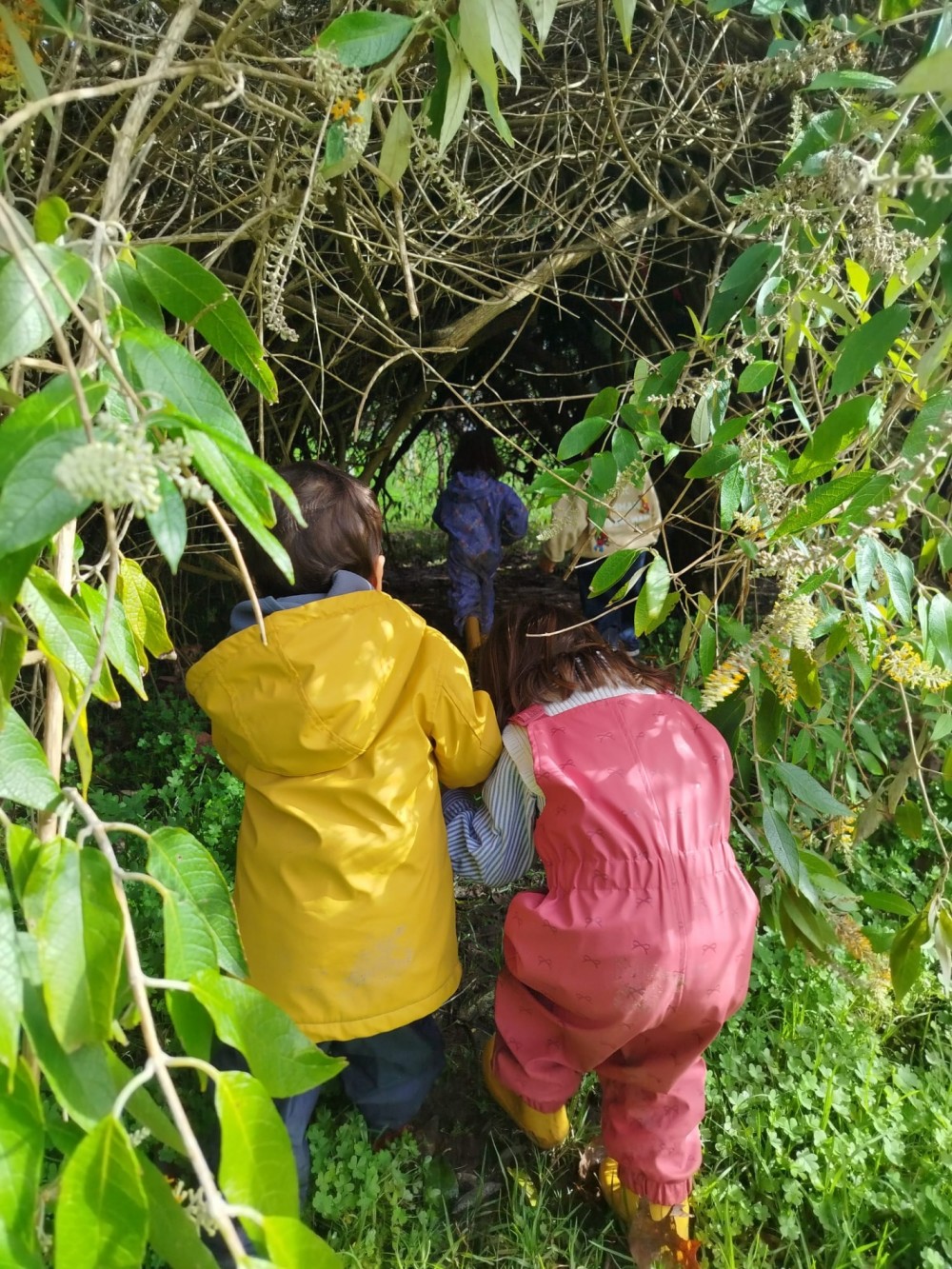
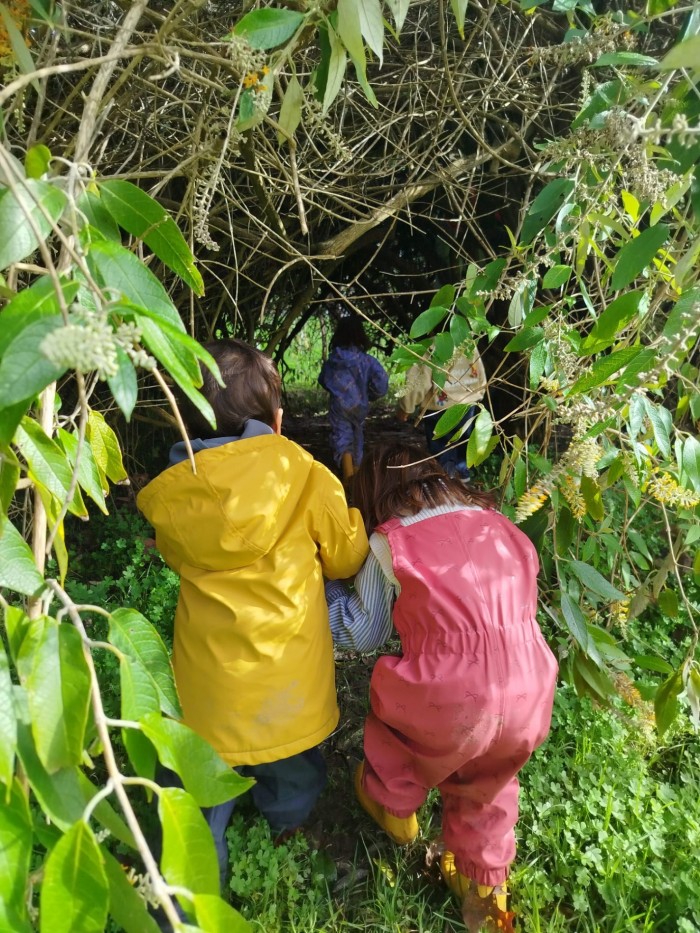
At our Forest School, where we value the freedom to play, to explore nature and to live outdoor experiences, children have space to relate to one another, to experiment and to build relationships.
That does not mean an absence of limits. It means that we do not set out to eliminate every possibility of conflict. Because relationships are not always positive. And learning to relate to others also means living through moments of disagreement, frustration and misunderstanding.
What we can and should control
We cannot control every interaction between children. And we do not believe it would be desirable to do so. What we can and should control is the way we, as responsible adults, act when these situations arise.
When a physical conflict happens, our priority is to ensure the safety and well-being of the children involved. To support the child who was bitten and to support the child who bit. We try to understand what happened, we help to interrupt the situation when necessary and we give each child space to recover. It is not about taking sides, nor about resolving the conflict for the children. It is about ensuring safety, helping each child to express what happened and creating the conditions for them to take part, step by step, in building a solution.4
The child who was bitten needs, of course, to be protected, reassured and supported in that moment. The child who bit also needs an adult who helps them understand what happened, recognise the impact of their action and gradually find other ways of acting.
Offering support is not playing down the situation, and understanding is not failing to intervene.
When a situation calls for a different kind of attention
Recognising that physical conflicts are part of development does not mean ignoring them.
Whenever a situation falls outside what is to be expected, it becomes the focus of our intervention as a team.
We observe the frequency, the context, the intensity and the impact it has on the children. We try to understand whether there is a need that is not being met, whether there is something in the environment that needs adjusting, or whether the child needs closer and different support.5
It means observing. Talking. Adjusting. Looking for strategies. Working together with families.
The message we want to share with families
We want to say that we understand how hard it is.
But we also want you to be able to look at these moments with some peace of mind: a bite does not define a child; a conflict does not define a relationship; a difficult moment does not define a whole day.
Children are learning to live with others. And we, as adults, are here to walk alongside them in that process. Not to guarantee that there will never be conflicts. But to guarantee that, when they do happen, children are not left alone to deal with them.
Sofia Rocha
Coordinator of Escola Lá Fora Almada
References
1. National Association for the Education of Young Children (NAEYC). (2023). Understanding and Responding to Children Who Bite.Teaching Young Children, 17 (1)
2. Blair, C., & Raver, C. C. (2015). School readiness and self-regulation: A developmental psychobiological approach. Annual Review of Psychology, 66, 711–731
3. Center on the Developing Child at Harvard University. (2014). Enhancing and practicing executive function skills with children from infancy to adolescence.https://developingchild.harvard.edu/resources/handouts-tools/activities-guide-enhancing-and-practicing-executive-function-skills
4. Blunk, E. M., Russell, E. M., & Armga, C. J. (2021). Pros and (con)flict: Using head-mounted cameras to identify teachers’ roles in intervening in conflict among preschool children. Early Childhood Research Quarterly, 55, 230–241
5. World Health Organization (WHO) (2020). Improving Early Childhood Development: WHO Guideline. World Health Organization